
A nursery dresser has a quieter job than the crib, but parents usually use it more often.
It holds the clothes, diapers, wipes, blankets, burp cloths, extra sheets, creams, tiny socks, seasonal backups, and all the things that somehow multiply after the baby arrives. It may also become the changing station. And because it usually sits at eye level, it has a big effect on how calm or cluttered the room feels.
That is why choosing the best nursery dresser is not really about finding the prettiest piece in a product photo. It is about choosing a dresser that fits the room, gives you the right kind of storage, feels safe once anchored, works with your changing setup, and still looks right after the newborn stage.
If you are comparing nursery dresser reviews, looking for a nursery dresser with changing table functionality, or trying to decide whether a matching crib and dresser set is worth it, the best starting point is simple:
Choose the dresser around the routine, not just the room photo.
A 3-drawer dresser can work well in a small nursery, shared room, or bedroom with closet storage. A 6-drawer dresser is better when the dresser will carry most of the clothing, diapering, and blanket storage.
Why the Dresser Deserves More Attention Than Parents Usually Give It
The crib usually gets chosen first. That makes sense. It is the main sleep piece, and it sets the look of the nursery. But once the baby is home, the dresser becomes one of the most used pieces of furniture in the room.
You open it during outfit changes. You reach for it during diaper changes. You use the top surface for baskets, a lamp, wipes, books, or a changing tray. As the baby grows, the dresser keeps working after the crib changes into a toddler bed or leaves the room completely.
That makes the dresser less of a baby item and more of a long-term storage decision.
A good nursery dresser should do four things well:
- Hold the daily essentials without creating overflow
- Open and close smoothly, even when used several times a day
- Fit safely in the room with anti-tip hardware installed
- Coordinate with the crib without making the nursery feel over-designed
The best dresser is not always the biggest one. It is the one that matches how the room will actually work.
3-Drawer vs. 5-Drawer vs. 6-Drawer Nursery Dressers
Drawer count is one of the easiest ways to narrow the decision, but it can also be misleading. A dresser with fewer drawers can still have deep, useful storage. A dresser with more drawers can still feel crowded if the layout does not match your routine.
| Dresser Type | Best For | What to Watch For |
|---|---|---|
| 3-drawer dresser | Small nurseries, shared rooms, secondary storage, homes with closet space | May not be enough if it needs to hold all clothes, diapers, blankets, and backups |
| 5-drawer dresser | Most nurseries, everyday storage, dresser-top changing setups | Still needs room for drawer clearance and safe anchoring |
| 6-drawer dresser | Families who want more long-term storage or less closet dependence | Can feel too large if the room is narrow or already has several furniture pieces |
If you are unsure, start by listing what the dresser needs to hold in the first six months. Then ask what it needs to hold after that. Newborn clothes are tiny, but the categories pile up quickly.
The Real Test: What Goes in Each Drawer?
One of the best ways to choose a dresser is to imagine the drawers already filled.
A practical nursery dresser might be organized like this:
- Top drawer: diapers, wipes, creams, burp cloths, pacifiers, small daily items
- Second drawer: onesies, sleepers, pajamas, socks
- Third drawer: swaddles, sleep sacks, crib sheets, backup changing covers
- Lower drawers: extra clothes, seasonal pieces, blankets, larger sizes, keepsakes
If that list already feels tight, a 3-drawer dresser may not be enough unless you have a strong closet system. If it feels manageable, a compact dresser may be the better choice because it keeps the room lighter.
The point is not to buy more drawers automatically. It is to avoid buying a dresser that looks right but starts failing during daily use.
What Makes a Nursery Dresser Safe?
Any dresser in a baby or toddler room should be anchored to the wall. This is true even when the baby is not crawling yet. Babies become mobile quickly, and toddlers eventually pull, climb, and test furniture in ways parents cannot always predict.
Before using the dresser, install the anti-tip hardware according to the manufacturer’s instructions. Do not wait until the child is older. Anchoring is part of setting up the nursery, not a later project.
Also check the dresser’s drawer behavior. Smooth drawers are useful, but safety matters too. Look for stable construction, a heavy back panel or anti-tip design features, reliable glides, and clear assembly instructions.
If you plan to use the top as a changing station, make sure the surface is wide and deep enough for the correct changing tray or pad. Nothing should hang over the edges. Supplies should be close enough to reach, but not scattered loosely across the surface.
Planning a Dresser-Top Changing Station?
A dresser can work well as a changing station when the top surface is properly sized and paired with the right changing tray. This can save space, especially in apartments or smaller nurseries.
Materials Matter, But the Language Has to Be Honest
Nursery furniture copy can get vague quickly. Words like “wood,” “natural,” “safe,” and “premium” are useful only when the product page explains what they mean.
For a nursery dresser, check the actual material breakdown. Is the dresser made from solid wood, MDF, veneer, rubberwood, or a mix? Are the legs and drawer pulls different from the drawer body? Does the finish language mention lead, phthalates, formaldehyde, or low-emissions standards?
This does not mean every dresser needs to be solid hardwood throughout. Many dressers use engineered wood because it can help with consistency, finish, and cost. But parents should not have to guess. The better product page tells you plainly what the dresser is made from, how the drawers work, and what safety hardware is included.
That clarity is especially important when comparing affordable nursery dressers with more elevated options. The better value is not always the lowest price. It is the dresser that gives you the most confidence in daily use.
Why a Matching Crib and Dresser Set Often Works Better
A matching crib and dresser set is not just about making the nursery look coordinated. It can make the whole room easier to plan.
When the crib and dresser share a similar finish, scale, and design language, the room feels calmer. That matters in smaller rooms where mixed finishes can quickly make the space feel busy. It also makes the dresser easier to keep after the crib stage because it still belongs with the rest of the room.
A matching set can also prevent a common mistake: buying a crib first, then trying to find a dresser later that almost matches but does not quite work. Close-but-not-quite finishes can be more distracting than a deliberate contrast.
If you already know which crib you want, compare the matching dresser before looking elsewhere. If you are choosing the dresser first, think about whether it can pair naturally with the crib, toddler bed, or big-kid room later.
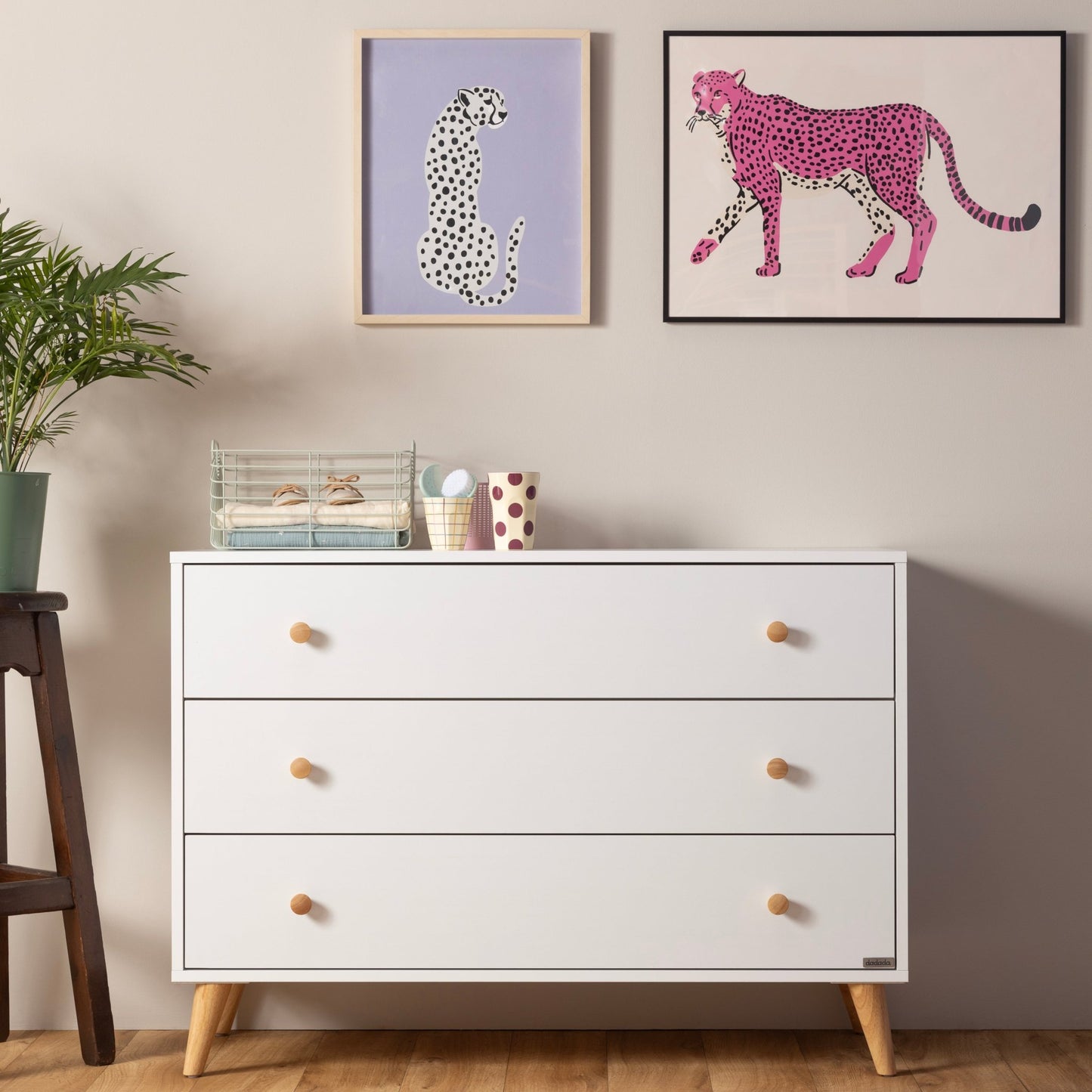
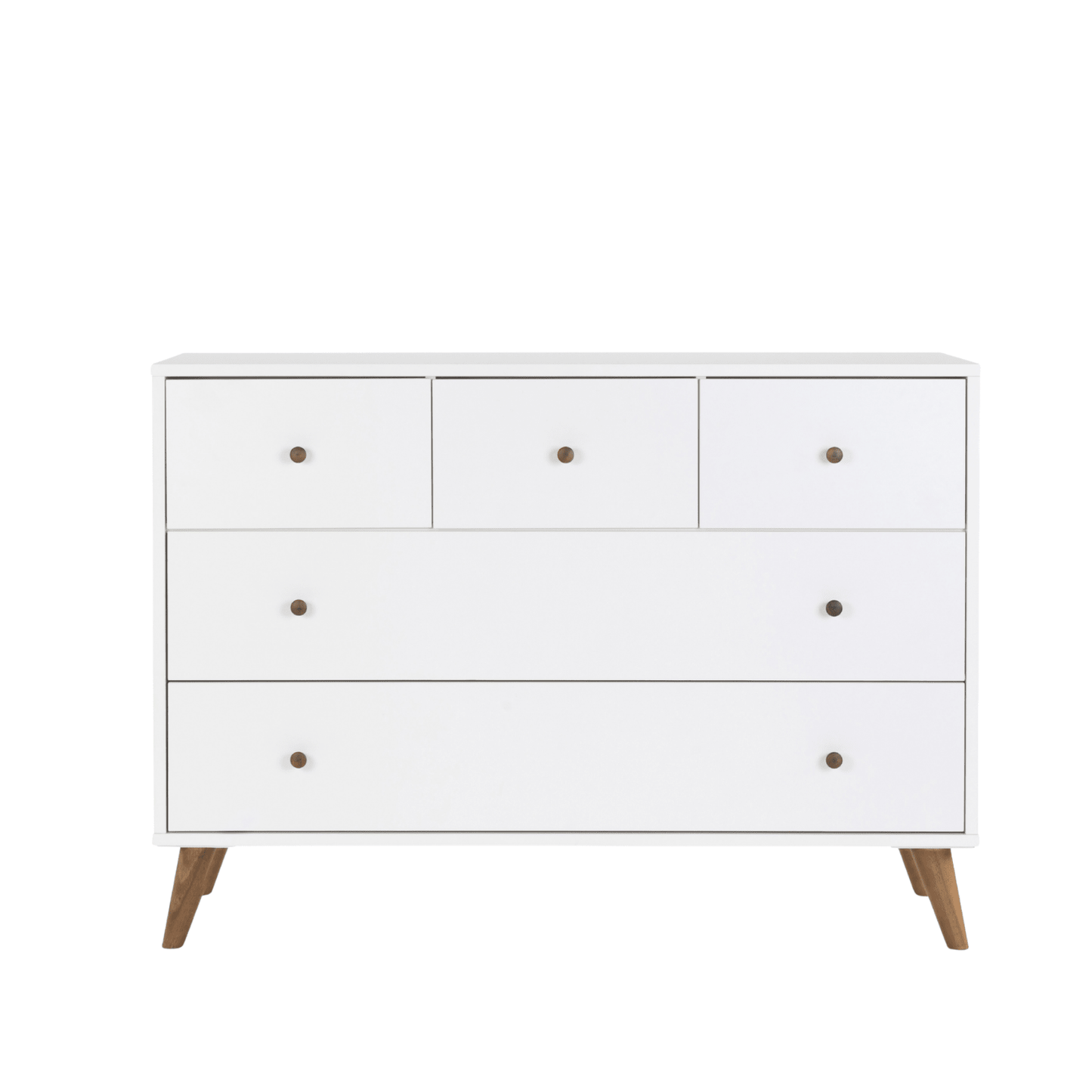
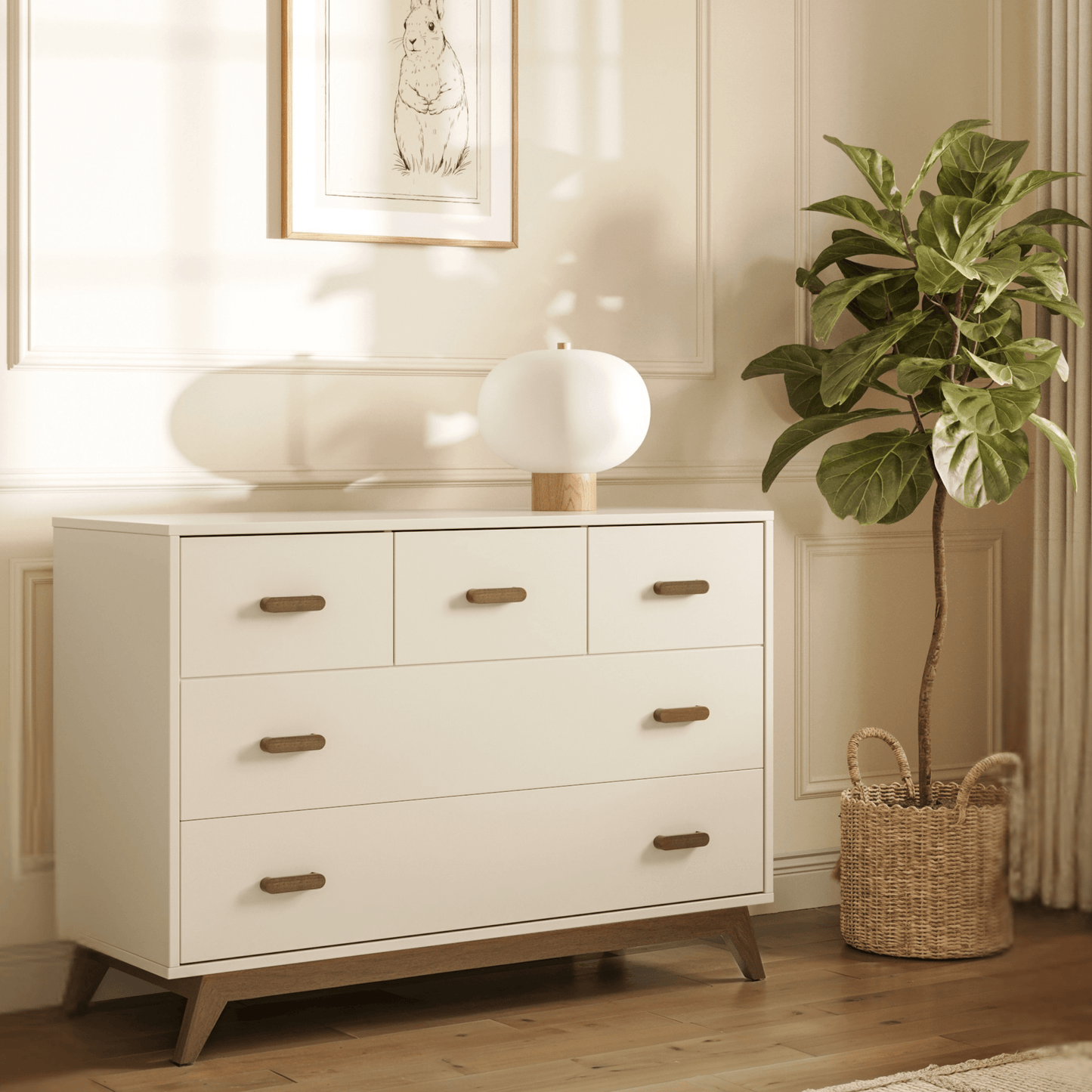
Four dadada Dressers to Consider
dadada’s dresser lineup gives parents a few clear directions: compact storage, balanced everyday storage, and larger long-term storage. The right choice depends less on which one looks best in a photo and more on what the room needs to do.

How to Measure Before You Buy
Do not measure only the wall. Measure how the dresser will function.
A dresser needs enough wall width, but it also needs space in front so drawers can open comfortably. If the dresser will sit near a crib, glider, closet, door, or hamper, make sure those pieces do not compete for the same clearance.
Before ordering, check:
- The full dresser width, depth, and height
- How far drawers need to open
- Whether you can stand comfortably in front of it
- Whether a changing tray or pad will fit on top
- Whether there is a safe wall area for anchoring
- Whether the dresser blocks outlets, vents, closet doors, or walkways
This is especially important for apartment nurseries and shared bedrooms. A dresser that technically fits may still feel wrong if it makes the room harder to move through at night.
What Nursery Dresser Reviews Actually Tell You
Reviews are most useful when they talk about real use, not just appearance.
Look for reviews that mention:
- Drawer smoothness
- Assembly clarity
- How much the drawers actually hold
- Whether the dresser feels sturdy
- Whether the finish looks good in person
- Whether the dresser worked well as a changing station
Be careful when multiple reviews mention the same problem, especially shallow drawers, chipped surfaces, misaligned parts, wobbling, or tipping concerns. One bad review may not mean much. A pattern does.
Also pay attention to words like “heavy.” In nursery furniture, heavy can be inconvenient during delivery, but it may also suggest a more substantial piece. The important part is that it is assembled correctly and anchored securely.
Should the Nursery Dresser Match the Crib?
It does not have to match exactly, but it should feel intentional.
A matching crib and dresser set is usually the easiest path because the finish, scale, and style are already designed to work together. That does not mean the nursery has to feel like a showroom. You can still add personality through rugs, art, lighting, bedding, baskets, and color.
Matching furniture is helpful when you want the room to feel calm. Mixing furniture can also work, but it takes more care. If the wood tones fight each other or the dresser feels too heavy next to the crib, the room can feel cluttered even when it is organized.
For dadada, this is where pairings like Austin with Austin or Soho with Soho make sense. They reduce the guesswork and help the room feel pulled together without overthinking every detail.
Build a Nursery That Works as a Set
Compare dadada dressers by drawer count, dimensions, glide type, changing tray compatibility, and finish. Then pair the dresser with a crib that fits the same room and routine.
Common Nursery Dresser Mistakes
The most common mistake is buying based on the front view only. A dresser can look perfect online, but if the drawers are too shallow or the top is not useful for your setup, it may frustrate you every day.
Another mistake is skipping the anti-tip hardware because the baby is still small. Wall anchoring should happen when the dresser is installed, not when the child starts climbing.
Parents also sometimes buy too small because the nursery is small. That can work if there is a closet or other storage nearby. But if the dresser has to hold everything, too little storage creates visible clutter fast.
On the other side, buying the largest dresser just because it seems more practical can make a small room feel crowded. The goal is not maximum storage at all costs. The goal is enough storage in the right footprint.
A Simple Buying Framework
If you are close to choosing a nursery dresser, use this order:
- Start with the room: Measure the wall, walkway, drawer clearance, and changing setup.
- Choose the drawer count: Decide whether 3, 5, or 6 drawers matches your storage habits.
- Check safety: Confirm anti-tip hardware and install it from the start.
- Review materials: Look for clear product language, not vague “wood” claims.
- Think beyond the baby stage: Choose a dresser that can still work in a toddler or big-kid room.
- Coordinate with the crib: Match or intentionally coordinate finish, scale, and style.
This keeps the decision practical. A nursery dresser should help the room work better, not just photograph better.
FAQ: Nursery Dressers, Storage, and Matching Sets
What is the best nursery dresser size for most families?
A 5-drawer dresser is often the best balance for many nurseries. It gives enough storage for daily baby essentials without feeling as large as a 6-drawer dresser.
Is a 3-drawer nursery dresser enough?
It can be enough if the room also has closet storage, baskets, shelves, or another storage piece. A 3-drawer dresser works best when it is not expected to hold every clothing size, blanket, diapering supply, and backup sheet.
When should I choose a 6-drawer nursery dresser?
A 6-drawer dresser makes sense when you want the dresser to handle most of the room’s storage. It is also useful if you want a piece that can grow into a toddler or big-kid bedroom.
Can a nursery dresser be used as a changing table?
Yes, if the dresser top is the right size and used with the correct changing tray or pad. Make sure the tray or pad fits securely and does not hang over the edges.
Should a nursery dresser be anchored to the wall?
Yes. Any dresser in a baby or toddler room should be anchored to the wall with anti-tip hardware. It should be done during setup, not later.
What should I look for in nursery dresser reviews?
Look for comments about drawer smoothness, sturdiness, assembly, finish quality, storage depth, and whether the dresser works well after months of use. Repeated complaints about wobbling, chipping, or shallow drawers are worth taking seriously.
Should the crib and dresser match?
They do not have to match exactly, but they should coordinate. A matching crib and dresser set usually creates the calmest look and makes the room easier to plan.
What is the best dadada dresser for a small nursery?
The Austin 3-Drawer Dresser is a strong option for smaller nurseries or shared rooms because it gives useful storage in a lighter footprint.
What is the best dadada dresser for everyday storage?
The Austin 5-Drawer Nursery Dresser and Soho 5-Drawer Nursery Dresser are both good everyday storage options. Austin has a clean, versatile look, while Soho has a warmer modern style.
What is the best dadada dresser for maximum storage?
The Bliss 6-Drawer Nursery Dresser is a better fit for families who want more drawer space and longer-term storage from one piece.
The Bottom Line
The best nursery dresser is not just the one that matches the crib or looks good in the first photo. It is the one that makes the room easier to use every day.
Start with the routine. Decide what needs to go inside, whether the top will be used for changing, how much room you have, and how long you want the dresser to stay in the home. Then choose the drawer count, style, and matching crib setup around that.
A good nursery dresser should feel calm, useful, and safe from the first week home through the years that follow.